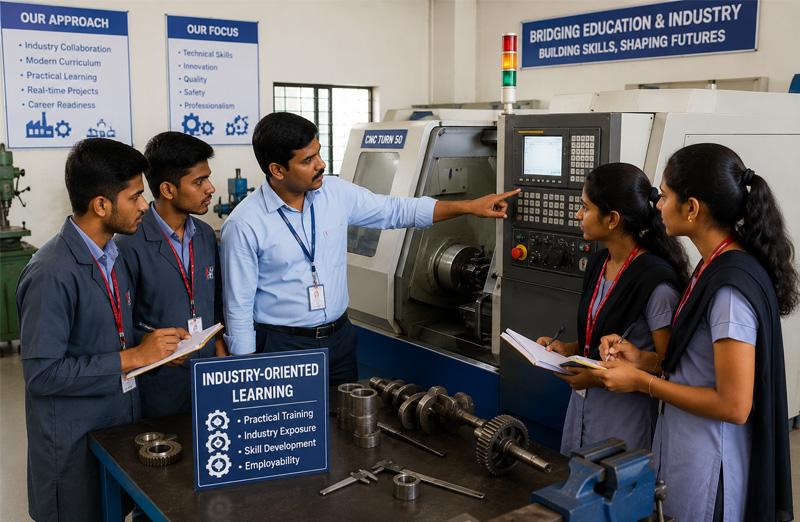
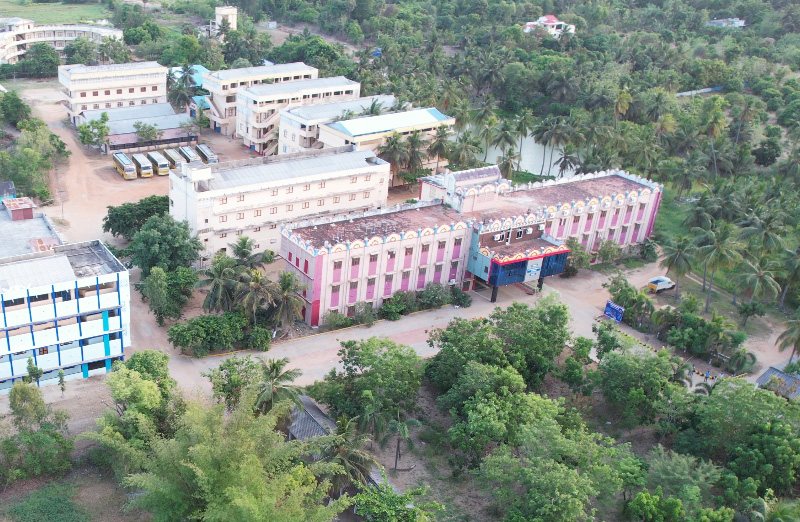
The academic framework at Sembodai R.V. Polytechnic College is designed to provide students with a balanced combination of theoretical knowledge, practical learning, technical expertise, and professional development.
The institution follows an industry-aligned curriculum supported by modern laboratories, workshops, project-based activities, industrial exposure, and faculty mentorship. Academic programmes are carefully structured to ensure that students gain strong conceptual understanding while developing problem-solving abilities and technical competency.
The academic environment encourages innovation, discipline, creativity, and continuous learning.
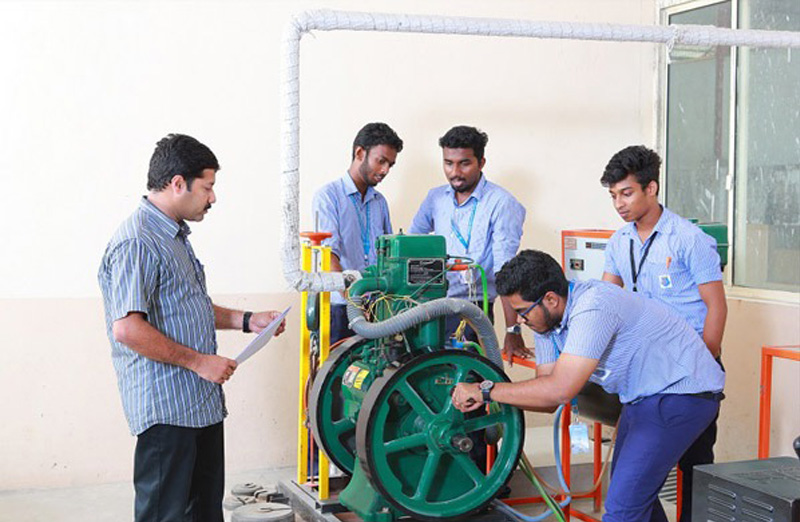
Sembodai R.V. Polytechnic College follows an interactive and student-centric teaching methodology that enhances understanding, application, and professional growth.
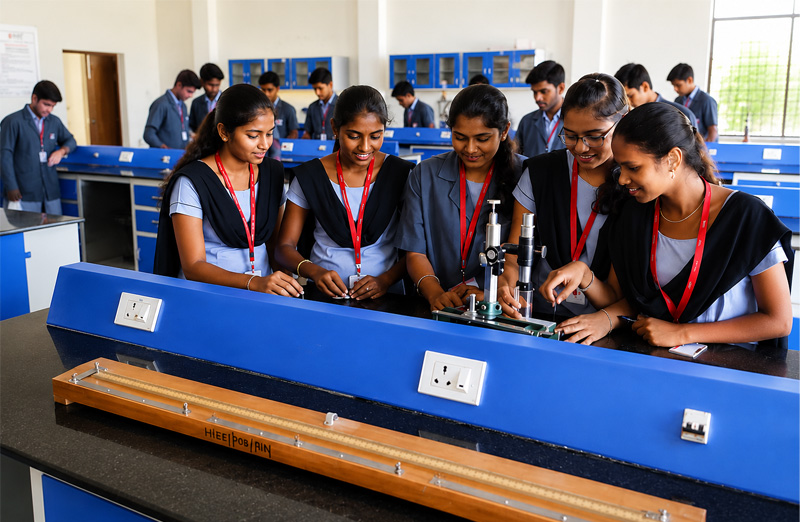
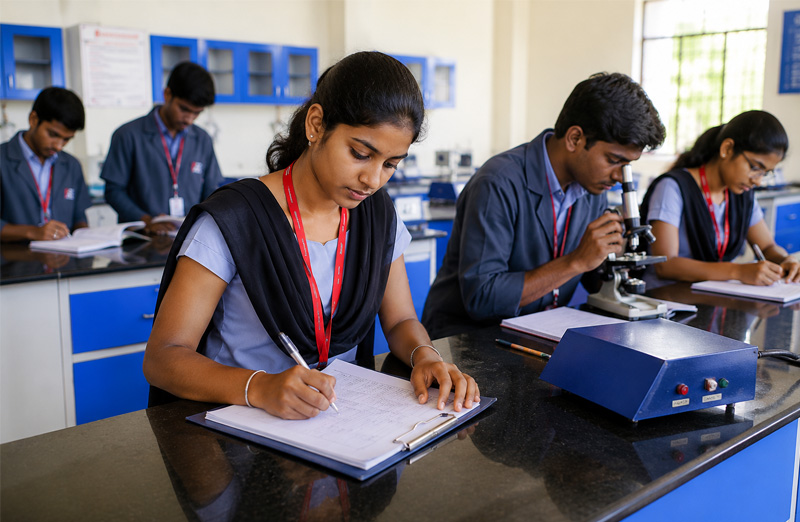
Classroom teaching is supported through practical demonstrations, laboratory sessions, workshops, seminars, technical discussions, industrial exposure, and digital learning approaches. Faculty members adopt modern instructional practices that encourage participation, analytical thinking, teamwork, and hands-on learning.
The institution focuses on transforming students from passive learners into confident and capable professionals.
The institution adopts an outcome-oriented learning approach that focuses on developing measurable knowledge, technical skills, practical competencies, and professional values.
Teaching and learning activities are designed to ensure that students achieve defined academic outcomes and industry expectations. Through projects, laboratory activities, internships, presentations, and continuous assessment, students are prepared to apply knowledge effectively in professional environments.
Outcome-Based Learning supports academic excellence while improving employability and lifelong learning abilities.
The academic calendar serves as a structured framework that guides the smooth conduct of academic activities throughout the academic year.
The calendar includes semester schedules, instructional periods, internal assessments, practical sessions, industrial visits, examinations, academic events, holidays, and student development programmes. This systematic approach helps maintain academic discipline and ensures timely completion of curriculum objectives.
Students are encouraged to actively participate in all scheduled academic and co-curricular activities for comprehensive development.
Internal assessment plays an important role in monitoring student performance and supporting continuous improvement throughout the learning process.
Student evaluation is carried out through periodic tests, assignments, practical assessments, project work, attendance, classroom participation, and academic activities. The assessment framework encourages consistent learning habits and helps students identify areas for improvement.
Regular feedback and academic guidance support students in achieving their educational goals effectively.
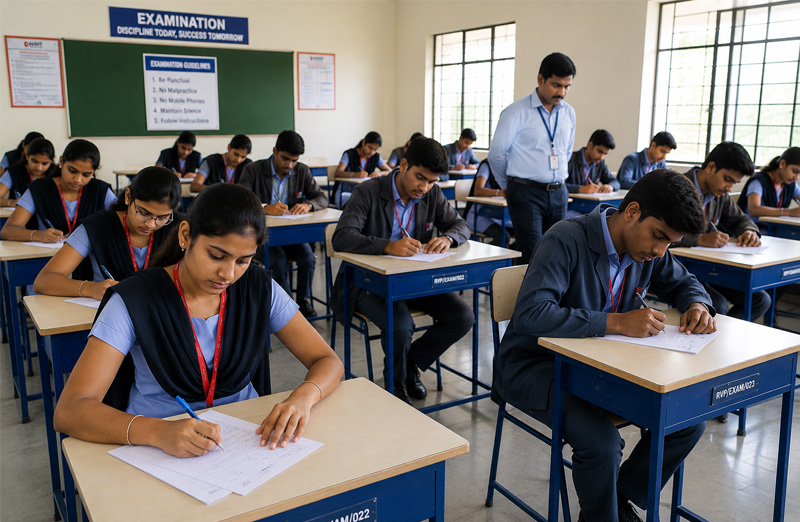
The examination system is designed to evaluate students’ academic understanding, practical competency, analytical thinking, and technical application skills.
Assessments are conducted through theory examinations, laboratory evaluations, internal assessments, project presentations, and semester-end examinations. The institution maintains a transparent evaluation process that promotes fairness, academic integrity, and continuous learning.
The examination framework encourages students to demonstrate both conceptual understanding and practical knowledge.
Sembodai R.V. Polytechnic College strongly believes that technical education should be directly connected with industrial expectations and professional practice.
The institution integrates industrial training, internships, workshops, technical sessions, industrial visits, skill development programmes, and project-based learning into the academic process. Students receive opportunities to gain practical exposure and understand real-world applications of engineering concepts.
Through continuous industry interaction and experiential learning, the institution prepares students to become confident professionals ready to meet evolving industrial challenges.